
IASEAI‘2026 Conference: Interdisciplinary Collaboration for Safe and Trustworthy AI
| Foundations of Systems AI | Neuro-mechanistic Modeling | Saarbrücken | Darmstadt
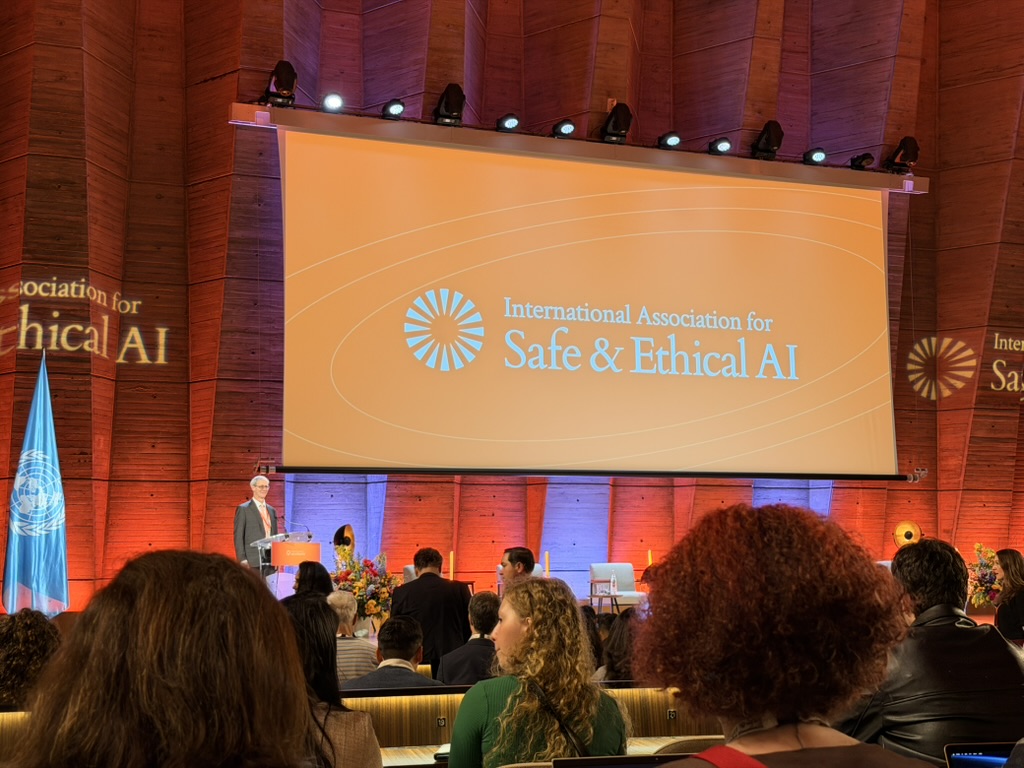
Already today, algorithms determine who receives a loan, what news we see and how the police organise their work. Given the growing real-world impact of AI systems, it is becoming increasingly important to focus on safety and ethical guidelines. As part of the IASEAI’2026 Conference, the IASEAI addressed this issue by bringing together renowned international experts from academia, politics, civil society and industry to promote research and exchange, discuss policy frameworks and ultimately advance the development of safe and ethical AI systems. Speakers included Yoshua Bengio, a pioneer in AI research and winner of the Turing Award, and Geoffrey Hinton, a winner of the Nobel Prize. The conference was organised by Mark Nitzberg of UC Berkeley, among others.
Researchers from DFKI and CERTAIN presented GRACE (Governor for Reason-Aligned Containment) at the conference: a system architecture designed to ensure that autonomous AI agents act not only effectively but also appropriately. GRACE separates moral evaluation from the actual decision-making process. A so-called “moral module” uses logic-based rules to determine which actions are permitted under which circumstances. It learns these rules from the feedback of a “moral instructor,” an external moral authority (typically a human). The “decision module” envelops an AI agent and enables it to choose the best practical steps within those boundaries. A “guardian” monitors compliance with the guidelines. Authors Felix Jahn (DFKI, Saarland University), Yannic Muskalla (DFKI, Saarland University), Lisa Dargasz (DFKI), Dr. Patrick Schramowski (DFKI, CERTAIN), and Dr. Kevin Baum (DFKI, Saarland Informatics Campus, CERTAIN) using an AI therapy assistant.
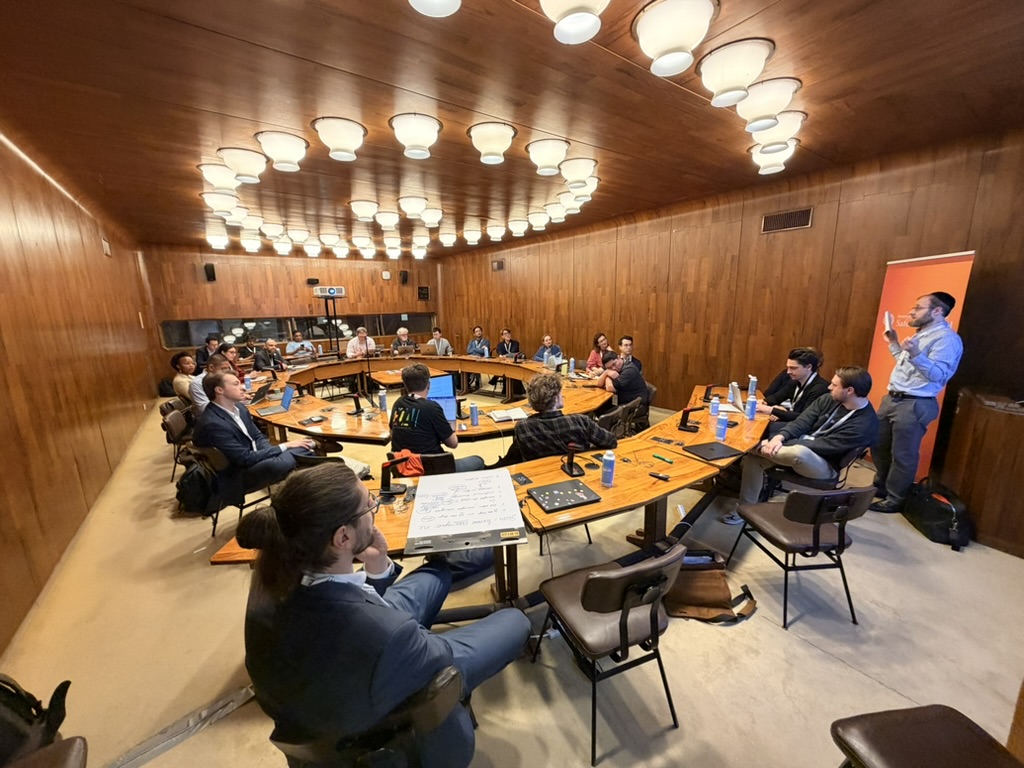
Another key factor in ensuring AI safety is the integration of human oversight. To explore this central safety aspect from an interdisciplinary perspective and discuss it in the context of the EU AI Regulation, Dr Kevin Baum and Dr Patrick Schramowski, together with Prof Dr Markus Langer of the University of Freiburg and Dr Johann Laux of Oxford University, organised the workshop 'Human Oversight of AI Variants, Technologies, and Conditions'. The central question was how human oversight differs from other forms of human involvement, and how effective, appropriate and meaningful oversight can be achieved for current systems and future AI agents.
Contact:
Dr. Kevin Baum, M.A. M.Sc.
- Kevin.Baum@dfki.de
- Phone: +49 681 85775 5251