Connected Intelligent Infrastructures (CII)
Competence Center at the German Research Center for Artificial Intelligence (DFKI)
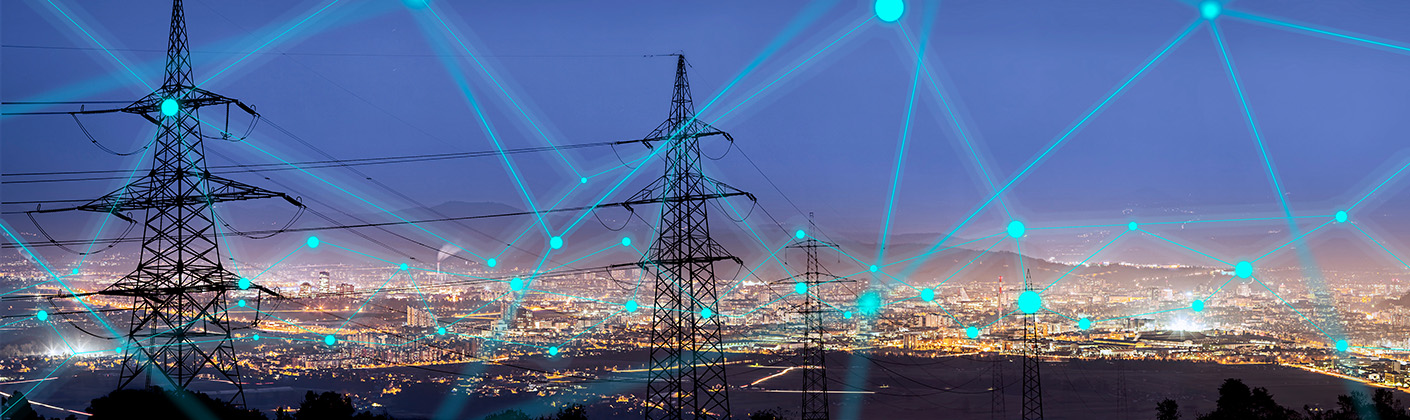
The Competence Center Connected Intelligent Infrastructures (CII) researches how artificial intelligence can be used to understand, plan, and intelligently control complex, interconnected infrastructures. As digitalization progresses, many areas that were previously considered separately are increasingly converging: energy grids, buildings, production systems, and urban infrastructures are no longer isolated but part of a closely linked whole. Infrastructure thus becomes the central connection between technical, economic, and social processes, forming the foundation for reliable and resilient systems that society, the economy, and public services depend on daily.
Connected Data as the Foundation of Intelligent Systems
Sensor technology, modern communication networks, and platform technologies enable seamless linking of data from various sources. Much of this information is generated by connected devices and machines—the Internet of Things (IoT). The semantic description of this data creates federated semantic data spaces that consolidate cross-domain knowledge. At the CII, these spaces form the basis for transforming rigid infrastructures into dynamic, networked systems and for gaining a deep understanding of complex interactions.
Visualization and Interaction
Besides data analysis, the clear presentation of complex relationships is becoming increasingly important. XR technologies and industrial metaverses allow vivid visualization of large data sets, models, and simulations, which can be interacted with effectively. This enhances planning, operations, and decision-making processes in areas such as energy grids, smart cities, smart buildings, and federated production systems.

"We eliminate systemic silos by intelligently connecting critical infrastructures. Using AI-based digital twins, federated data spaces, and industrial metaverses, we are shaping the resilient, sustainable smart city and autonomous production of tomorrow. Our focus is on sovereign data use and the secure management of complex energy, building, and utility networks."