
Artificial intelligence decodes the aging of the immune system
The MARK research project – Molecular Analysis of Age-Related Risk Mechanisms through Artificial Intelligence – aims to develop an AI-supported prediction model that will provide a better understanding of age-related changes in the immune system.
Scientists from the German Research Center for Artificial Intelligence (DFKI) and Mainz University Medical Center are working closely together to decode the molecular processes of aging using state-of-the-art AI methods. The aim is to identify biological markers that reveal early signs of disease, paving the way for new diagnostic and therapeutic approaches.
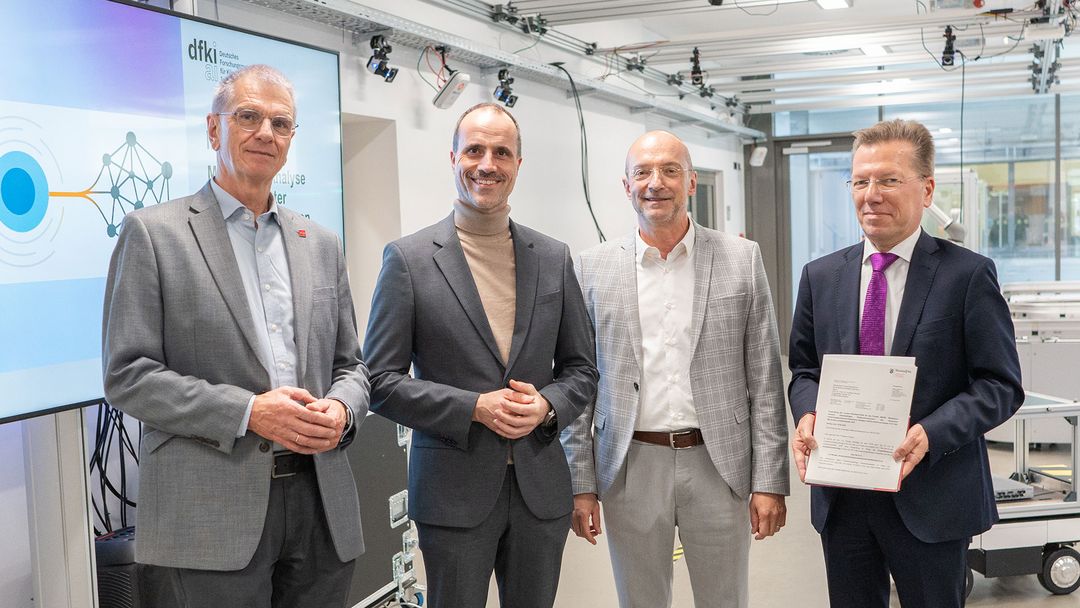
"The MARK project impressively demonstrates how the combination of artificial intelligence and biotechnology can lead to concrete medical progress. By jointly investigating age-related changes in the immune system, researchers at DFKI and Mainz University Medical Center are opening up new perspectives for prevention, diagnosis, and therapy. Such projects are of great value because they combine scientific excellence with immediate benefits for the health of people in Rhineland-Palatinate", said Minister of Science and Health Clemens Hoch.
The project is funded by the Rhineland-Palatinate Ministry of Science and Health with approximately €300,000. It combines the basic biomedical research and medical expertise of Mainz University Medical Center with the technological excellence of DFKI.
Rethinking aging – living with knowledge instead of fate
Prof. Dr. Andreas Dengel, Excecutive Director of DFKI in Kaiserslautern and Head of the Smart Data & Knowledge Services research department, emphasizes: "Aging is not inevitable – it is a question of whether we as a society invest enough in knowledge. Today, we burn through billions on late-stage treatments instead of understanding early on when and why health declines. We can choose to view aging as a data science task: with the help of AI, patterns can be identified years in advance that show where risks arise – enabling timely countermeasures to be taken before serious diseases develop. Modern AI provides us with the tools to do this – not to “optimize” people, but to keep them healthy for longer. If we succeed in this, we will not only relieve the burden on the healthcare system, but also give older people back their participation and quality of life. That is real social progress."
Prof. Dr. Wolfram Ruf, Scientific Director of the Center for Thrombosis and Hemostasis at the University Medical Center, is looking forward to the collaboration: "In our basic research over the past few years, we have obtained unique, high-dimensional data sets on the aging of the immune system and its effects on blood vessels. Thanks to the unique AI applications at DFKI, we can now gain a deep understanding of aging-related processes and develop new therapeutic approaches for healthy aging."
AI & Life Sciences – Research for Society
While Mainz has extensive data from single-cell research on the immune system, DFKI's AI experts are developing innovative methods to evaluate this data in an explainable and understandable way.
MARK further strengthens Rhineland-Palatinate's position as a location for life sciences and artificial intelligence. The project results promise not only advances in basic research, but also new opportunities for the prevention and treatment of age-related diseases – and thus a direct benefit for society.