
Intelligent technologies for astronaut training
Although intelligent systems are increasingly operating autonomously in space, humans remain an indispensable part of space travel. DFKI is developing innovative training methods to prepare astronauts for future missions in a realistic and efficient way while they are still on Earth.
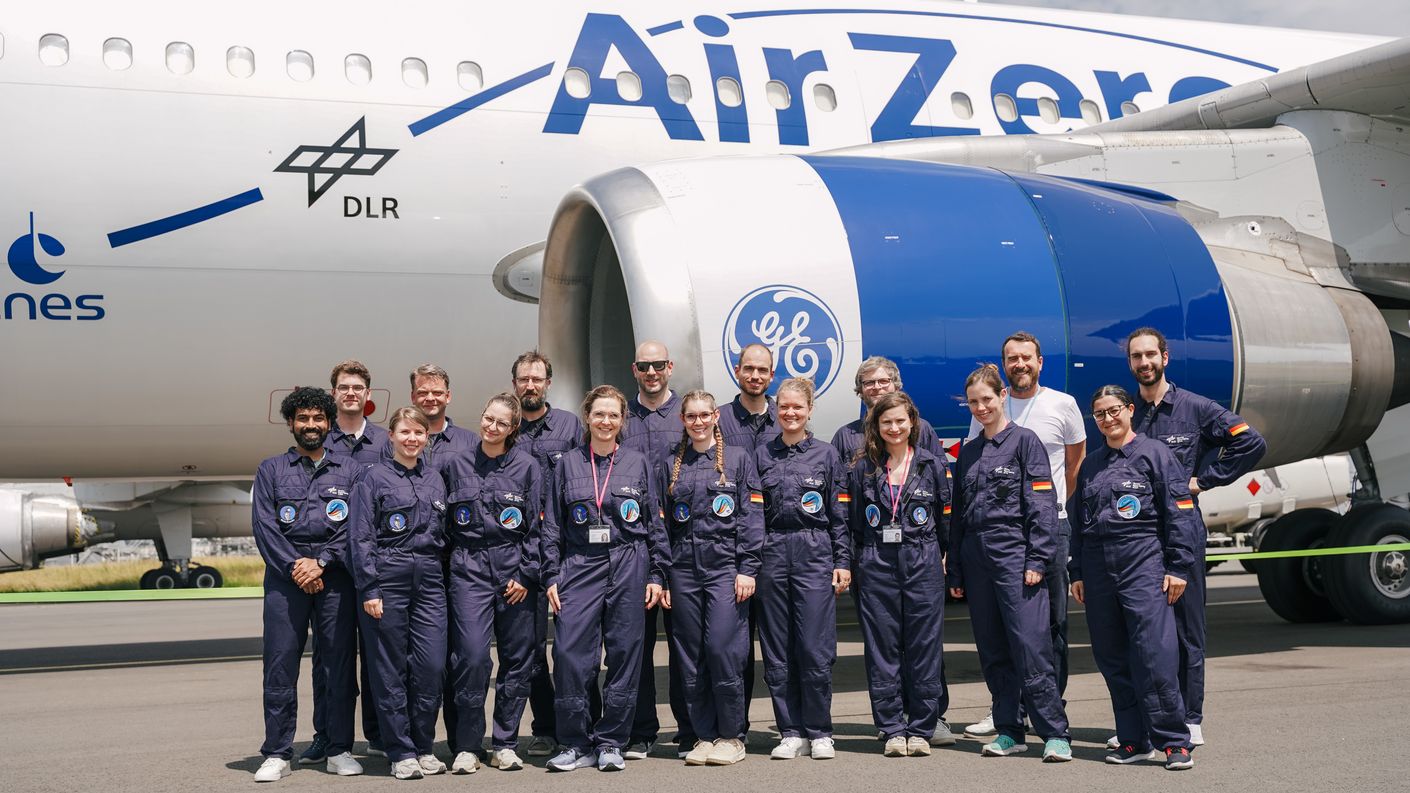
Astronaut training with exoskeleton in simulated weightlessness
 © DLR
© DLRIn space, astronauts often have to perform fine motor tasks such as repairs or experiments. These tasks are considerably more difficult in microgravity. Training these skills specifically is crucial to ensure efficient mission procedures and crew safety.
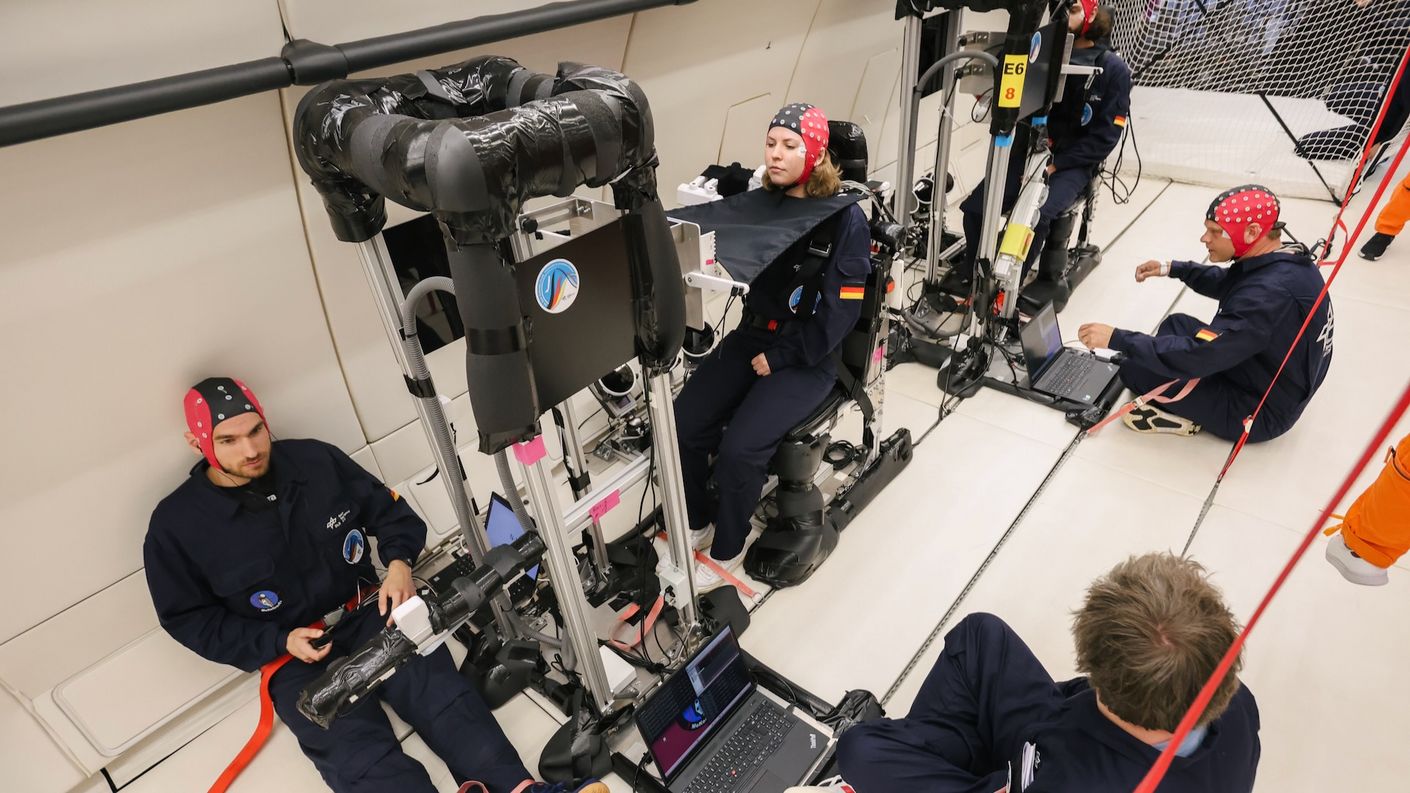
Until now, such training has mainly been carried out on parabolic flights or in underwater exercises involving spacesuits. These procedures are complex, costly, and logistically demanding. The Robotics Innovation Center is therefore collaborating with the University of Duisburg-Essen to explore a more realistic and cost-effective alternative: an active exoskeleton that counteracts the weight of the arms with targeted force assistance, creating a sensation of movement akin to weightlessness.
 © Novespace
To determine whether training with the exoskeleton on Earth produces comparable physical and motor effects to exercises in real microgravity, test subjects underwent a training programme lasting several weeks in the laboratory. They performed a fine motor task under simulated weightlessness and then took part in parabolic flights, repeating the same task with a passive exoskeleton under conditions of real weightlessness. Their muscle and brain activity were recorded during the experiments. An untrained control group was used for comparison purposes to validate the training effects.
The initial results show that exoskeleton training on Earth can improve performance in real weightlessness conditions. If this effect is confirmed, the training could be used to support astronaut preparation for space missions more specifically.
Contact: Prof. Dr. Elsa Kirchner, Marc Tabie
Virtual mission preparation through immersive simulations with haptic feedback
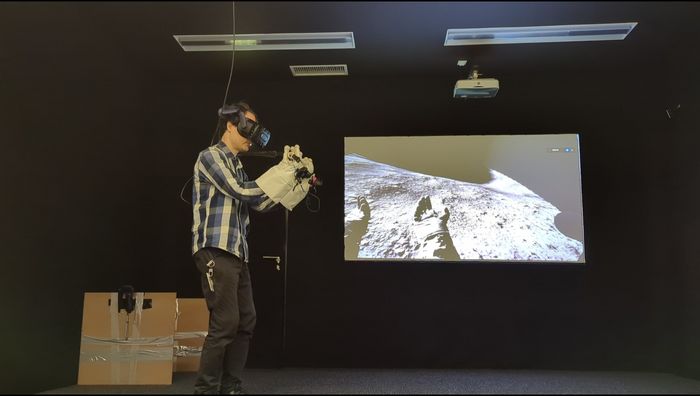
The Cognitive Assistants research department is collaborating with European research partners to explore the potential of virtual reality (VR) in making mission planning and astronaut training on Earth more realistic and efficient. Future space missions can already be tested on the ground in immersive, interactive environments, covering everything from individual work steps to the development of Concepts of Operations (ConOps) – detailed mission plans that define the course of a mission.
 © Florian Dufresne
 © Florian Dufresne
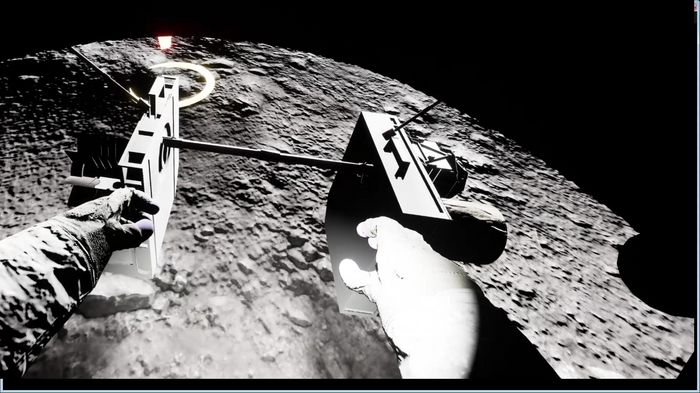
A key focus is designing virtual training environments that reflect the physical experience of manned space missions as accurately as possible, for example on the surface of the Moon. However, pure VR simulations have their limitations, as they can only reproduce haptic perception – i.e., the feeling of direct contact with tools and surfaces – to a limited extent. To address this, the team integrates passive haptic interfaces into the simulation, such as physical props like tools or astronaut gloves that replicate the handling of real-life astronautical equipment. This creates a tangible connection between the real and virtual worlds. This concept was implemented using the procedure of the Apollo 12 mission as an example and was tested in experiments involving experts in manned spaceflight, including astronauts and instructors.
The results show that haptic feedback significantly enhances the feeling of presence and body awareness in the virtual environment. As a result, test subjects were able to assess and evaluate mission procedures more realistically. This research, which involved DFKI, thus provides an important basis for using VR as a reliable tool for training astronauts and planning future space missions.
Contact: André Zenner
Related News
- Parabolic flight with exoskeleton: DFKI and University of Duisburg-Essen explore innovative spaceflight training in microgravity
- Parabolic flight with exoskeleton: DFKI and University of Duisburg-Essen test fine motor skills in weightlessness
- Von der Reha in die Raumfahrt: DFKI präsentiert Exoskelett zur Simulation von Schwerelosigkeit auf der Digital Health Conference 2022
Further articles on space explorations
DFKI4Space

Unique research and testing infrastructure for space robots
 © DFKI, Annemarie Popp
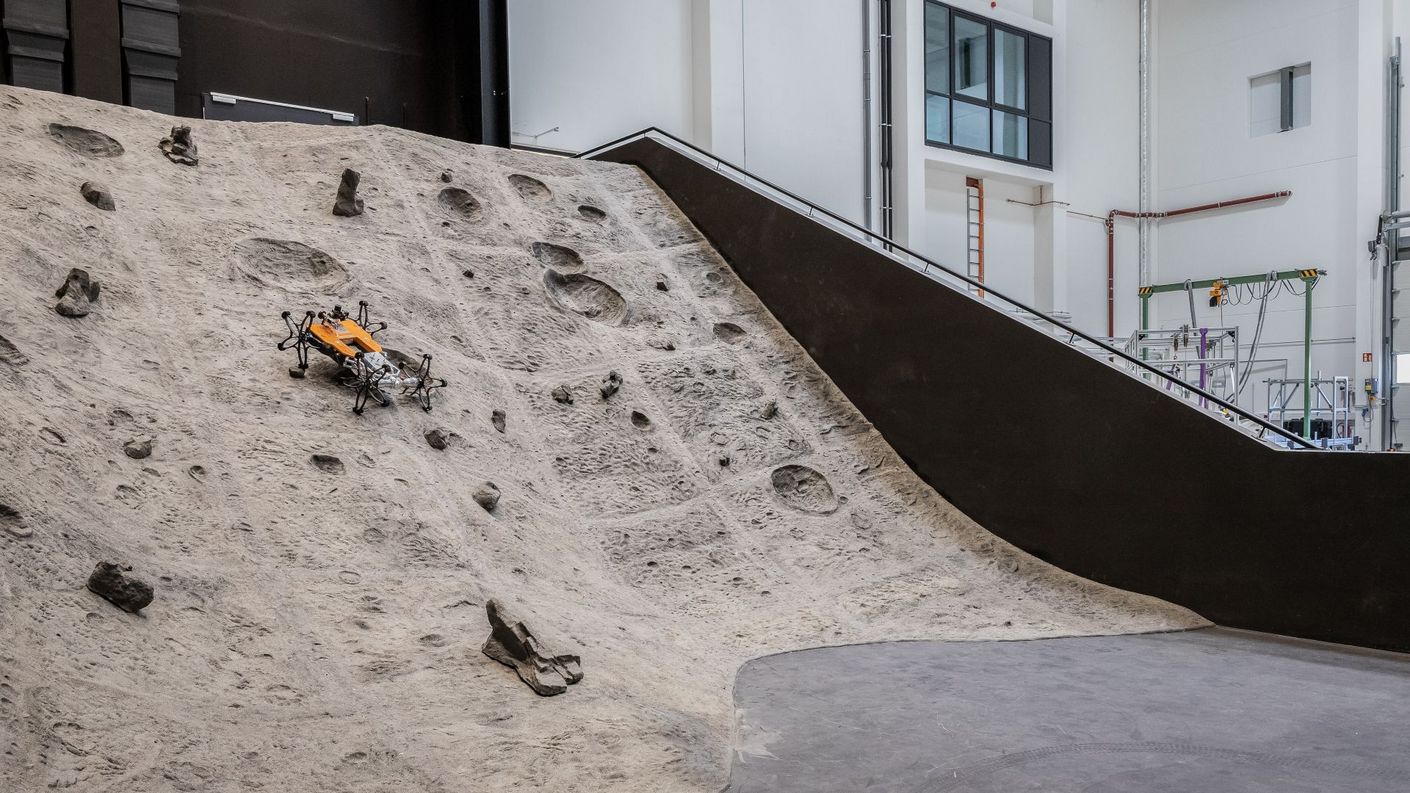
The Robotics Innovation Center in Bremen features a highly specialized research and testing infrastructure that enables the practical development and evaluation of robotic systems under realistic conditions. Systems, modules, and control units are tested iteratively to systematically increase their technology readiness and gradually adapt them to the requirements of planetary and orbital missions.
Test facilities:
- Crater landscape: Simulates Moon and Mars conditions, including slopes of up to 45°.
- Maritime Exploration Hall: Underwater and microgravity experiments with motion tracking.
- Virtual Reality Lab: Immersive environment for simulation, mission control, and teleoperation.
- ISO-compliant cleanroom: Hardware and electronics integration and quality control.
Field tests worldwide:
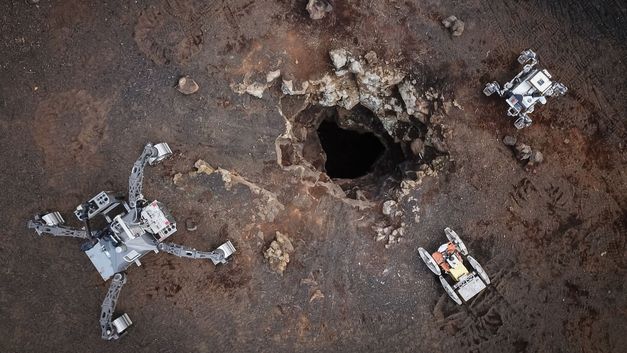
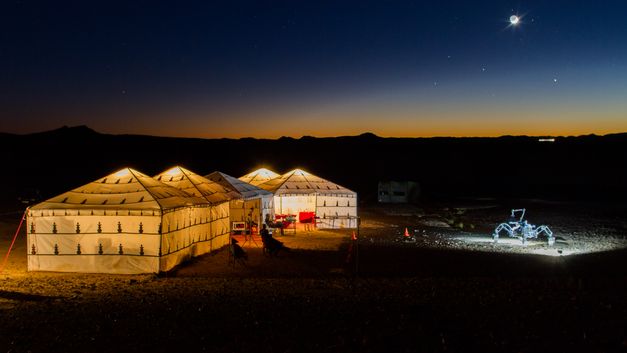
Testing under space-analog conditions on Earth, e.g., deserts, lava caves, or ice-covered waters.
ESA_Lab@DFKI – AI for space
 © ESA
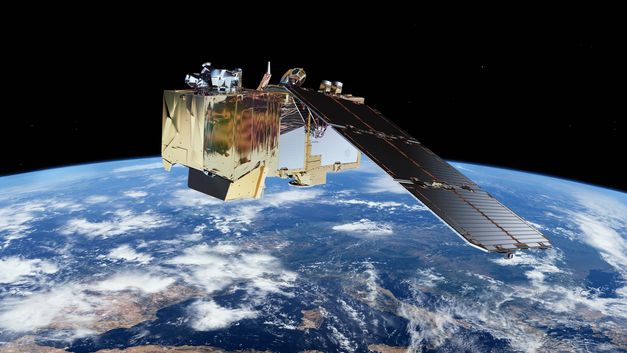
© ESATo develop new AI technologies and applications for civil spaceflight, the European Space Agency (ESA) and the DFKI established the ESA_Lab@DFKI.
At the transfer lab in Kaiserslautern, researchers from both institutions work together on:
- AI systems for analyzing complex Earth observation data
- Solutions for satellite collision avoidance
This collaboration fosters a close exchange between research and practical space operations.